God vs. Government: Taking a Biblical Stand When Christ and Compliance Collide
“Welcome to our peaceful protest.” In the spring of 2020, government mandates forced churches across North America to close their doors in response to the COVID-19 pandemic. As societal fear and unrest increased, Christians were forced to grapple with how God wanted them to respond to these state-imposed restrictions. After all, didn’t the closure of churches pose a serious threat in a time when people needed spiritual direction more than ever?God vs. Government follows two churches’ courageous decisions to reopen despite orders to remain closed. Guided by the command in Hebrews 10:25 that churches not forsake meeting together, pastors John MacArthur and James Coates led their congregations to return to in-person meetings-and were swiftly met by unsympathetic governing authorities ready to shut them down again. The ensuing legal battles raised important questions about religious freedom, and more importantly, illuminated what it looks like to take a stand when Christ and compliance collide. How do we react with wisdom and discernment when the state encroaches upon the church? God vs. Government tells two incredible accounts that affirm our need to be faithful to the Lord’s commands no matter the circumstances. Review FOREWORD by John MacArthur In view of recent events, three basic biblical truths must be emphasized. First, the church is essential. Second, the church must gather regularly and corporately. Third, the church is duty?bound to obey Christ even when doing so violates governmental regulations and restrictions. Given the fundamental nature of these New Testament priorities, it’s hard to believe they would prove controversial, especially among evangelicals. But here we are. There has been a great deal of both controversy and compromise, which is why the message of this book is so necessary. A company of believers is not a “church” if they don’t gather. The word for “church” in the original New Testament manuscripts is ekklesia. Even before the founding of the New Testament church, that word signified an assembly, a gathering of people. It is comprised of two Greek roots that literally mean “called out,” and more specifically, it refers to a body of people called out from their homes (or summoned out of a larger group) in order to muster together. Like the English word congregation, the concept of a group coming together is built right into the term. The church specifically comes together for worship, but the vital benefits of the assembly include fellowship, instruction, mutual encouragement, and accountability. Believers are commanded not to forsake the assembly (Hebrews 10:25), and that command comes immediately before the New Testament’s most somber warning about apostasy. Fellowship and corporate worship are therefore absolutely essential aspects of spiritual health for individual Christians, and they are also (obviously) vital for the very life of the church. Believers may be forced by illness, imprisonment, warfare, natural disaster, necessary travel, or some other significant emergency to abstain from the corporate gathering temporarily. But there is no justification for the entire church to suspend congregational worship on a prolonged basis. Plagues, pandemics, and persecution have frequently (if not constantly) threatened the people of God since that first Pentecost. Never have faithful churches responded to such obstacles by simply shutting their doors for months at a time and declaring distance?learning technologies a sufficient substitute for corporate worship. Christians in America and other Western democracies have been blessed and privileged to thrive for more than two centuries under governments that formally affirm and have seldom challenged the right of worshippers to assemble freely. But COVID is a wakeup call and a reminder to believers of how tenuous that liberty is. Pastors in supposedly free countries were literally jailed for weeks because they led worsh
Product Information
Product Information
Shipping & Returns
Shipping & Returns
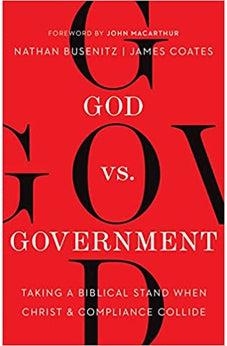
God vs. Government: Taking a Biblical Stand When Christ and Compliance Collide
God vs. Government: Taking a Biblical Stand When Christ and Compliance Collide
“Welcome to our peaceful protest.” In the spring of 2020, government mandates forced churches across North America to close their doors in response to the COVID-19 pandemic. As societal fear and unrest increased, Christians were forced to grapple with how God wanted them to respond to these state-imposed restrictions. After all, didn’t the closure of churches pose a serious threat in a time when people needed spiritual direction more than ever?God vs. Government follows two churches’ courageous decisions to reopen despite orders to remain closed. Guided by the command in Hebrews 10:25 that churches not forsake meeting together, pastors John MacArthur and James Coates led their congregations to return to in-person meetings-and were swiftly met by unsympathetic governing authorities ready to shut them down again. The ensuing legal battles raised important questions about religious freedom, and more importantly, illuminated what it looks like to take a stand when Christ and compliance collide. How do we react with wisdom and discernment when the state encroaches upon the church? God vs. Government tells two incredible accounts that affirm our need to be faithful to the Lord’s commands no matter the circumstances. Review FOREWORD by John MacArthur In view of recent events, three basic biblical truths must be emphasized. First, the church is essential. Second, the church must gather regularly and corporately. Third, the church is duty?bound to obey Christ even when doing so violates governmental regulations and restrictions. Given the fundamental nature of these New Testament priorities, it’s hard to believe they would prove controversial, especially among evangelicals. But here we are. There has been a great deal of both controversy and compromise, which is why the message of this book is so necessary. A company of believers is not a “church” if they don’t gather. The word for “church” in the original New Testament manuscripts is ekklesia. Even before the founding of the New Testament church, that word signified an assembly, a gathering of people. It is comprised of two Greek roots that literally mean “called out,” and more specifically, it refers to a body of people called out from their homes (or summoned out of a larger group) in order to muster together. Like the English word congregation, the concept of a group coming together is built right into the term. The church specifically comes together for worship, but the vital benefits of the assembly include fellowship, instruction, mutual encouragement, and accountability. Believers are commanded not to forsake the assembly (Hebrews 10:25), and that command comes immediately before the New Testament’s most somber warning about apostasy. Fellowship and corporate worship are therefore absolutely essential aspects of spiritual health for individual Christians, and they are also (obviously) vital for the very life of the church. Believers may be forced by illness, imprisonment, warfare, natural disaster, necessary travel, or some other significant emergency to abstain from the corporate gathering temporarily. But there is no justification for the entire church to suspend congregational worship on a prolonged basis. Plagues, pandemics, and persecution have frequently (if not constantly) threatened the people of God since that first Pentecost. Never have faithful churches responded to such obstacles by simply shutting their doors for months at a time and declaring distance?learning technologies a sufficient substitute for corporate worship. Christians in America and other Western democracies have been blessed and privileged to thrive for more than two centuries under governments that formally affirm and have seldom challenged the right of worshippers to assemble freely. But COVID is a wakeup call and a reminder to believers of how tenuous that liberty is. Pastors in supposedly free countries were literally jailed for weeks because they led worsh
Original: $3.99
-70%$3.99
$1.20Product Information
Product Information
Shipping & Returns
Shipping & Returns
Description
“Welcome to our peaceful protest.” In the spring of 2020, government mandates forced churches across North America to close their doors in response to the COVID-19 pandemic. As societal fear and unrest increased, Christians were forced to grapple with how God wanted them to respond to these state-imposed restrictions. After all, didn’t the closure of churches pose a serious threat in a time when people needed spiritual direction more than ever?God vs. Government follows two churches’ courageous decisions to reopen despite orders to remain closed. Guided by the command in Hebrews 10:25 that churches not forsake meeting together, pastors John MacArthur and James Coates led their congregations to return to in-person meetings-and were swiftly met by unsympathetic governing authorities ready to shut them down again. The ensuing legal battles raised important questions about religious freedom, and more importantly, illuminated what it looks like to take a stand when Christ and compliance collide. How do we react with wisdom and discernment when the state encroaches upon the church? God vs. Government tells two incredible accounts that affirm our need to be faithful to the Lord’s commands no matter the circumstances. Review FOREWORD by John MacArthur In view of recent events, three basic biblical truths must be emphasized. First, the church is essential. Second, the church must gather regularly and corporately. Third, the church is duty?bound to obey Christ even when doing so violates governmental regulations and restrictions. Given the fundamental nature of these New Testament priorities, it’s hard to believe they would prove controversial, especially among evangelicals. But here we are. There has been a great deal of both controversy and compromise, which is why the message of this book is so necessary. A company of believers is not a “church” if they don’t gather. The word for “church” in the original New Testament manuscripts is ekklesia. Even before the founding of the New Testament church, that word signified an assembly, a gathering of people. It is comprised of two Greek roots that literally mean “called out,” and more specifically, it refers to a body of people called out from their homes (or summoned out of a larger group) in order to muster together. Like the English word congregation, the concept of a group coming together is built right into the term. The church specifically comes together for worship, but the vital benefits of the assembly include fellowship, instruction, mutual encouragement, and accountability. Believers are commanded not to forsake the assembly (Hebrews 10:25), and that command comes immediately before the New Testament’s most somber warning about apostasy. Fellowship and corporate worship are therefore absolutely essential aspects of spiritual health for individual Christians, and they are also (obviously) vital for the very life of the church. Believers may be forced by illness, imprisonment, warfare, natural disaster, necessary travel, or some other significant emergency to abstain from the corporate gathering temporarily. But there is no justification for the entire church to suspend congregational worship on a prolonged basis. Plagues, pandemics, and persecution have frequently (if not constantly) threatened the people of God since that first Pentecost. Never have faithful churches responded to such obstacles by simply shutting their doors for months at a time and declaring distance?learning technologies a sufficient substitute for corporate worship. Christians in America and other Western democracies have been blessed and privileged to thrive for more than two centuries under governments that formally affirm and have seldom challenged the right of worshippers to assemble freely. But COVID is a wakeup call and a reminder to believers of how tenuous that liberty is. Pastors in supposedly free countries were literally jailed for weeks because they led worsh